History & places
History continues. HS2, the abandoned line. And that bat tunnel…
Chris Dodd ·
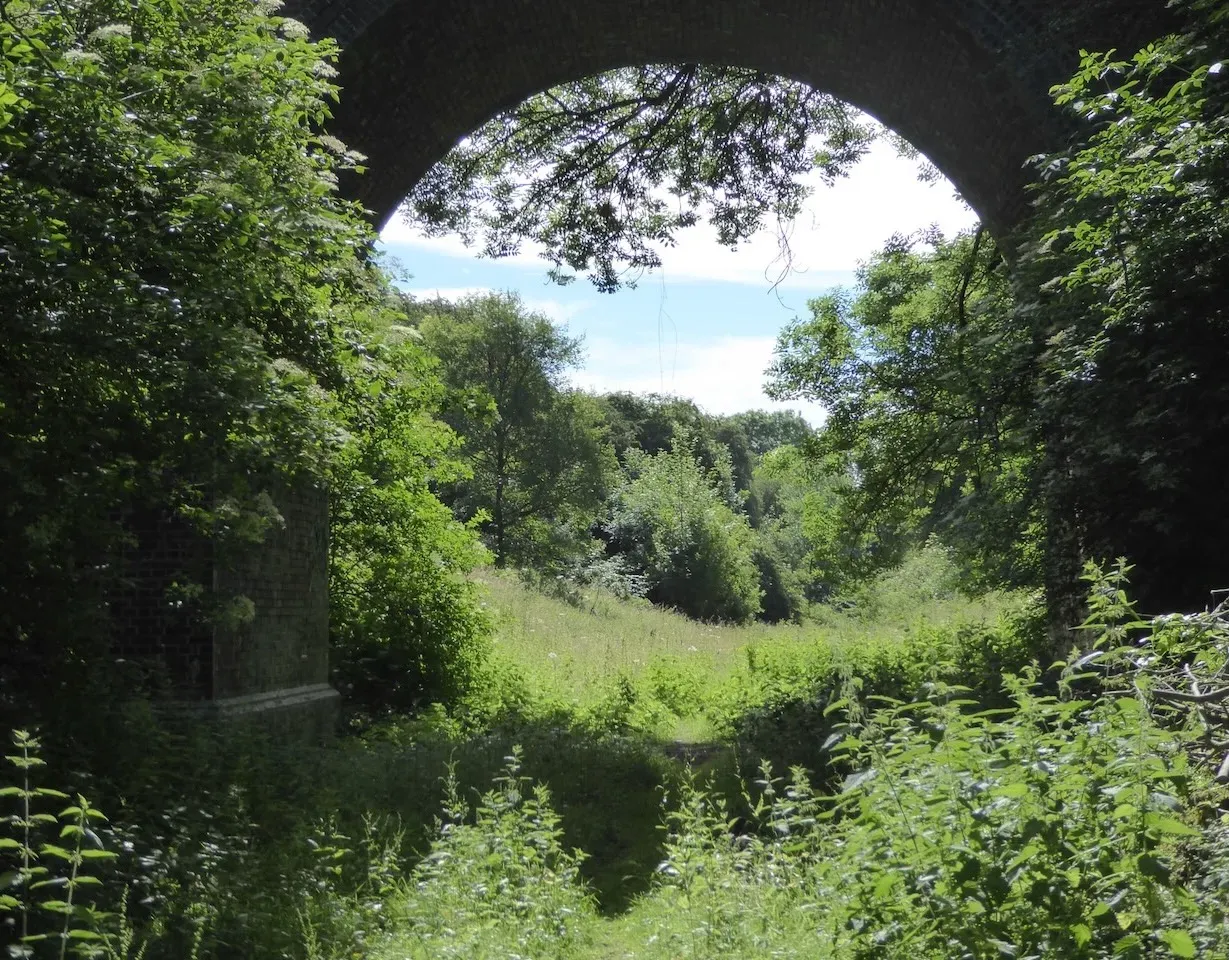
What happens when some abandoned land has transformed into one of the last havens for wildlife in an area and then is demanded for a development…?
This is one of the abandoned rail cuttings at the rail junction just south of Woodford Halse (the setting of Chapter 12 – Hidden in the Fields). These cuttings are now a wonderful 17-acre pocket park, open to the public and managed for Northamptonshire Council by the Wildlife Trust.
The Great Central Rail line ran between London and Nottingham until the early 1960’s when the route was closed down in the so-called, ‘Beeching Cuts’. In towns the rail land was often redeveloped. In the countryside, some stretches were merged into fields, but much was left alone, as here at this junction. There’s a really interesting model railway club in town, well worth a visit if you ask for an invite. Their layout shows some of the Woodford Halse rail hub in its heyday between the 1930’s and 1950’s. They know so much of the story of the railway here and how its closure affected the town. It’s a fascinating story.
I’ve also seen how these abandoned lines can be far more than just a ‘super-hedge.’ They have a number of habitats, including pockets of grassland and wetland. And given that some of these abandoned lines stretch for miles, they can be a vital connector between other pockets of remaining habitat.
HS2 is re-using one 6-mile stretch of the abandoned GCR line further south of here at Calvert. Another 5 miles of HS2 will parallel the line within its belt of habitats. These stretches are now very wildlife rich, including bluebell woods and a key butterfly site. This is also where the infamous bat tunnel is being built – for £100m, to protect bats, including a colony of rare, Bechstein’s bats. Bats do hunt along corridors so would be in danger along the cuttings, but the cost has been calculated at £300,000 per Bechstein’s bat.
Yet dig a bit deeper. Wildlife groups didn’t say there had to be a gold-plated tunnel. The issue was mainly around a run-away HS2 along with a government rule-following, planning, engineering and budgeting system. The scheme was not mandated by Natural England or the Bat Conservation Trust. I don’t think there are many environmentalists who would see this as the best use of £100m. That is more than the entire 3-year funding by government for the National Species Recovery Programme (which is for all endangered species in England). England’s nature organisations could have used that £100m to assist far, far, far more of our remaining habitats and wildlife.
Discussion of this ‘bat tunnel’ needs to rise above simple political rhetoric or throwaway comments down the pub. Far better would be to ensure that on these high-cost projects like HS2 there is a sensible adjudicator who can take a clear overview, not be bogged down in the details, and work with the developers, government and the wildlife organisations to get the best solution. Or perhaps that is now happening?
Comments
Leave a comment